Strategic Voting in a Toss-Up Riding
Just had a very nice chat with one of my local candidates for #Elxn44 in #KitchenerCentre.
It was @morricemike of the @CanadianGreens.
He does bookable short calls with voters to talk about issues. It’s a great idea and shows a lot of confidence.
After watching some debates between local candidates I've decided to vote Green. So I wanted to explain a bit why if others are having trouble deciding.
Kitchener Centre
You see, I live in #KitchenerCentre, which is a complicated riding to say the least. It has historically flipped between Libs and Cons but, more recently has been a Liberal stronghold. Now that Liberal candidate Raj Saini has stepped down from campaigning, it throws open the doors for a flip. But it’s tricky because Saini is still on the ballot.
How many people will realize? What will they do?
On top of that, last election, @morricemike surprised everyone outside the riding by coming in second. He was pretty close too. Greens rarely do that unless they win or are the leader.
Around town, it wasn’t surprising because everyone had seen all the signs for Mike, seen him him at the market, around town, or at his office right on King St.
Also interesting, is the fact that the nearby city of Guelph has gone Green provincially (@MikeSchreiner), which gives you this feeling that people can think a bit different here.
Plus, now there is also a viable new NDP candidate, and our riding is already strongly NDP provincially with the fantastic @LauraMaeLindo
So what's gonna happen?
I don't know. But I do like how Mike thinks so here's how I think about it in terms of strategic voting.
And as I've long said, all voting is strategic:
The Possible Paths
Path 1: The Liberals aren’t going to win the riding.
But if they do, Saini will either sit as an independent, or Libs will do a byelection eventually. What does that mean? No influence for a long time.
Path 2: The Conservatives win the riding.
Bad bad bad, they’d be incorrigible at the market!
But seriously, and more importantly, they will continue to speed us toward climate catastrophe, feed a culture of distrust in science, and do nothing to deal with the actual problems in our society.
Path 3: The NDP win. Fine, great.
Path 4: @morricemike Wins the Seat
He’d be the second, or third, Green party MP in parliament this session. And he’d be the first in, what forever?, from Ontario. People in Ottawa and elsewhere will find out what we all know here. Mike’s a lucid, creative, thoughtful person who’s pragmatic about getting things done in government.
Mike pointed out while we were chatting that Green Party members always get mentioned disproportionately often in the news and it's true. We all know who Elizabeth May is. Sure, mostly that her (ok, I'm a May fan alright? https://popthestack.wordpress.com/tag/elizabeth-may/)
But it's also true that the Green Party is…, well, kind of *weird*. Journalists love weird, underdog stories.
And finally, since they KNOW they won’t form government, they don’t have to pretend they will.
So they can actually, you know, say what they really thing is wrong.
I like that.
So faced with the choices of being ignored as some minor NDP riding or shining bright as a #Green spot of hope, the choice is actually easy.
I choose hope.
Every time.
Originally tweeted by Mark Crowley (@rateldajer) on September 16, 2021.
Early Soundbite Grading-Part 1
So it’s a few days into **Election 41** and I’m still trying to finish all the grading
for my Spring courses. But I can’t help bring out the red grading pen for some
party leader moments this week.
## Part 1 – **Jagmeet Singh**
l’ve been pleasantly surprised how extensive
some of the NDP policy plans are so
early out the gate (B+). However,
Mr. Singh made a huge gaff, from a
Data Science perspective, which would obligate
many red marks in my course. He
stood in front of a chart prop with
a red line, jaggedly rising to the top
right and some title about Trudeau’s failure
on housing prices. The title was in both official languages (great), but was not actually descriptive of the content of the figure (not great), rather only describing an interpretation of it (C-). But worst of all, was the graph had no axis or scale (F). That is, it didn’t say what
the horizontal x direction meant, or the
vertical y direction. In these days of
Covid plots we’re all now become familair even with log plots, to show huge
increases in the same space, is this plot log
or linear? We do not know.
Of course, it is just a prop, meant to convey
an idea, but scientific have meaning. The NDP
is a party that centres its policy on science,
so purposely doing this badly is condescending to voters who know better, and shows a lack of
interest in increasing acceptance of scientific
approaches. This is especially disappointing when
I’m sure the data supporting their point
exists and is readily available. The cost of
housing *is rising* across Canada and one could argue the government could do more
to keep these increases under control. I don’t
know whether that’s really feasible or desirable on
a national scale, but it’s a clear point of
view that the appropriate graphs, with actual information content, could help support.
Dust Off That Blog, It’s Election Time (Again…)
Whew, it’s been a while hasn’t it? There’s dust everywhere…how do you even get dust inside a blog? Oh well.
There’s an election in Ontario Canada on June 7, 2018 September 20, 2021 and well, I have opinions (see @rateldajer for the political part of me on Twitter).
What’s was on my mind that last Ontario election:
- In something I don’t remember ever seeing happen before, the Liberals are admitting they cannot win the election at this point.
- It may all come down to strategic voting in Toronto.
- Voting as maximizing Delight and minimizing Dismay.
What’s on my mind right now:
- This is the Liberal’s Election to Lose: The Conservatives and Greens are in disarray, the NDP are struggling to gain traction (although it’s not clear why, their leader is quite good and they have lots of potential fantastic candidates locally across the country) and the Liberals have been doing as well as one could reasonable expect handling a global pandemic.
- The Elephant in the Greenhouse: What they haven’t really done well on is moving Canada towards a conversation we need to have about fossil fuels, not just cars, all of it, and how Canada is going to deal with the imminent collapse of the global climate balance. Their opponents will push and pull them in opposing directions on this, as they should. But will they take the bold step in the direction of action in order to gain the political benefit and accept the inevitable cost, or will they play it safe. History suggest the latter.
- The Wildcard: Some day a new charismatic hope will arise on the left (in the NDP or Greens) or on the right (in the CPC) and could sway the discussion and the mood to disrupt this perfect storm that is supporting the Liberals. For the CPC is would require an epic personality, as controlling and strategically strong as Stephen Harper but as charistmatic as…well, at least Jean Chretien, perhaps Trudeau senior levels would be required. For the NDP, Jagmeeet Singh should be able to do, on paper, but it just doesn’t seem to be panning out. It isn’t the NDP fundamentally, eg. Jack Layton. Is it the times? Is it the colourful headrest? I know there’s another candidate reason but I just can’t remember it… Completely unrelated, a New Something Hope is possible in Avi Lewis in Vancouver. As a late Gen X’er raised on Much Music myself, having a former MM VJ as PM or Leader of the Official Opposition is very exciting concept. Erica Ehm for Ministry of Culture, Jeannie Becker for Foreign Affairs, … Rick for Industry.
anyways, work to do, those exams won’t grade themselves….although…maybe I could use… AI!
Relevant to the Discussion
I’ve written about politics and elections a lot in the past on this blog. So if you are thinking of voting remember that Every Vote is a Strategic Vote and if you’re not planning on voting then consider that Old People Vote Like Crazy, Now Will Crazy Young People Vote? and Why Canadians Don’t Vote.
Note: this post is a refreshed and all new version of one a few years ago just before the ontario election started. Let's see if I end up posting more this time than I did then. Not likely.
On the Burning of Bridges
So we just got another call from the Peter Mackay campaign to ask for our support. I don’t think he gets it. We just laughed and laughed. Sigh….
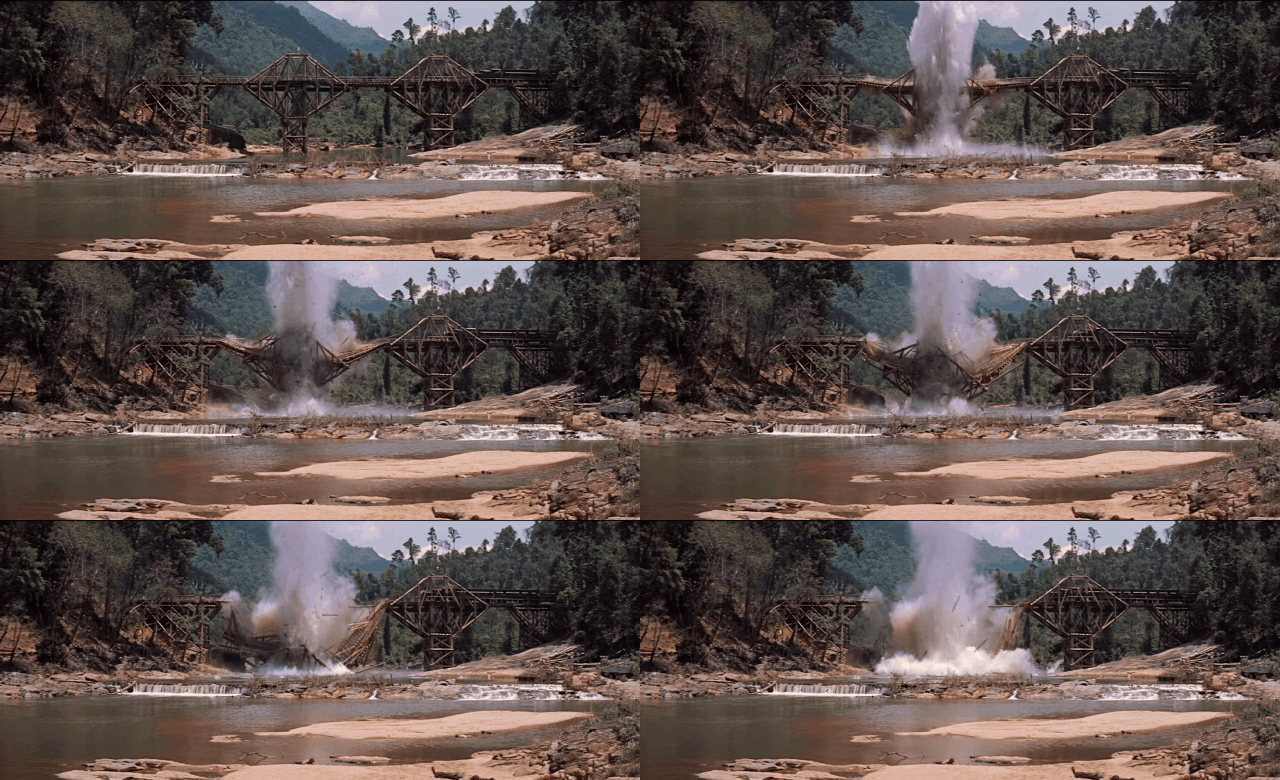
Many people who used to vote Progressive Conservative, including some in our household, will NEVER support Mr. Mackay. He betrayed that movement by merging the parties.
He betrayed the idea that there can be reasoned debate about fiscal policy while agreeing that Canada is a Social Democracy unlike America’s system which seems to be unsure if it wants to be a Mild Social Democracy or a Total Libertarian Free-for-all.
I truly believe Canada needs a progressive conservative party (note the lower case), many Canadians want a less “in their face” government and truly care about deficits. But Peter Mackay cannot be their standard barer just because he thinks it is “his turn”.
In fact, if the Conservative Party of Canada, which literally just removed “progressive” from their name and mandate, want to go back to the left then what’s the best way to signal that?
Hint: it’s NOT picking another entitled white man for leader.
Yes, Change is Hard and Requires Math, That is Why We Elected You
So it seems that the response about the electoral reform committee (EMME) process is that there are lots of committed, organized, focused, passionate people who want to make this country better, speaking for the importance of changing our voting system to one that assigns seats in proportion to the total votes. But…that most Canadians just aren’t interested, or excited. Well, I guess if no one is interested it must mean everything is fine.
The committee report did not choose a specific proportional system that Canada should switch to, but it did put constraints on what that system should be. 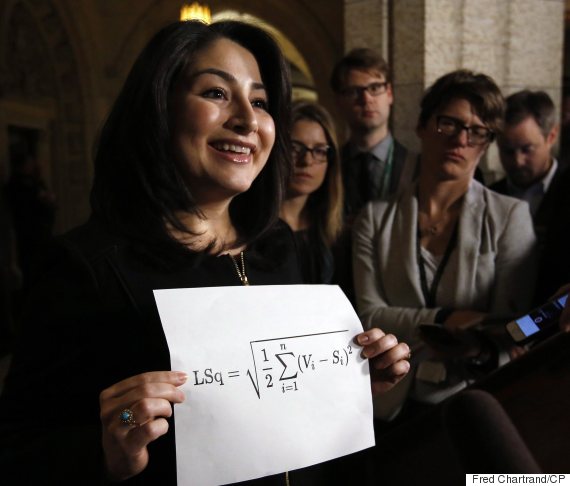 When criticizing the report of that committee Minister of Democratic Institutions Maryam Monsef used the fact that one of those constraints was a formula called the Gallagher Index. She didn’t critique the index itself or what it meant for different possible systems. She critiqued the fact that it was a complicated looking formula. Complicated? Is that the Liberal Party saying something is too complicated for the Canadian public to understand?
No, you know what’s complicated?
Climate change is complicated.

But that didn’t stop you.
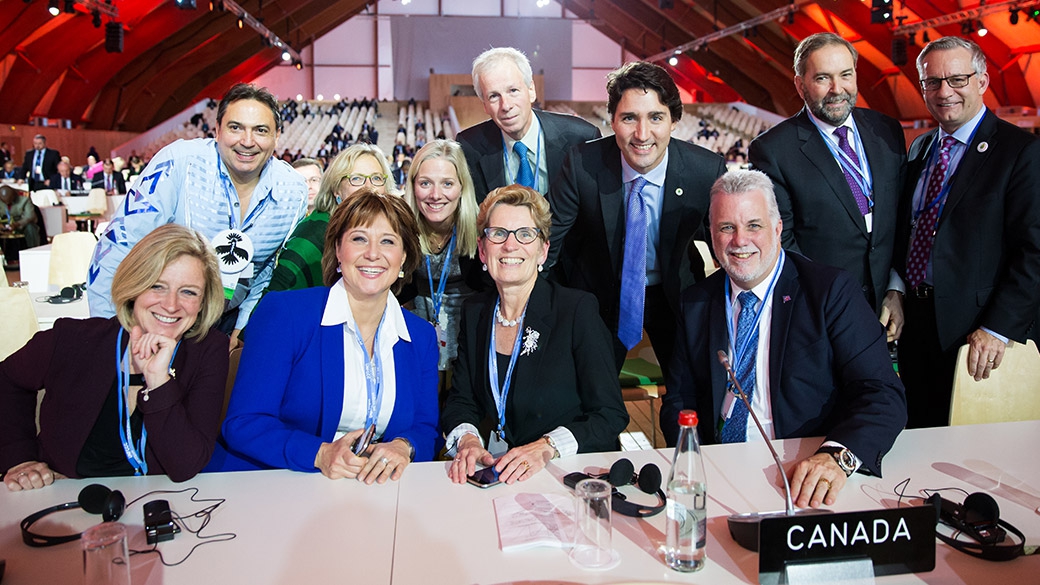
Impossible Economic/Environmental Tradeoffs are complicated.
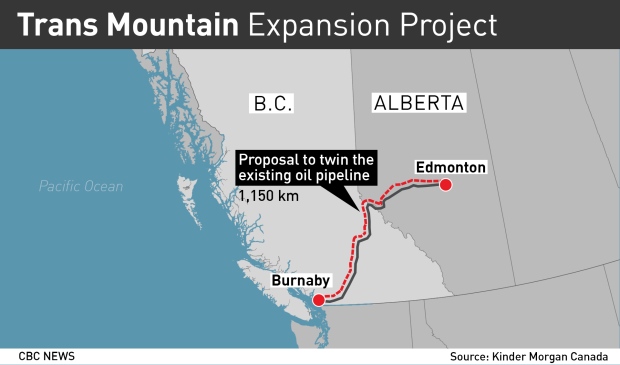
But you make a choice and expect us to understand.
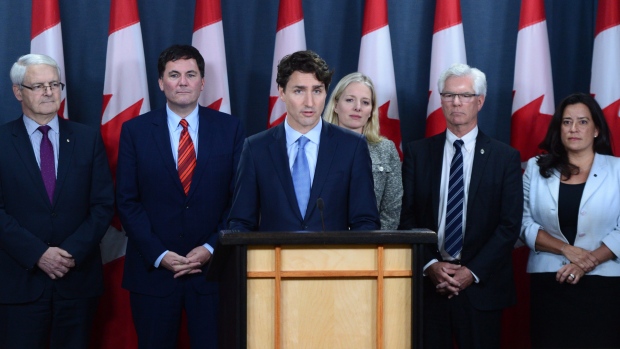
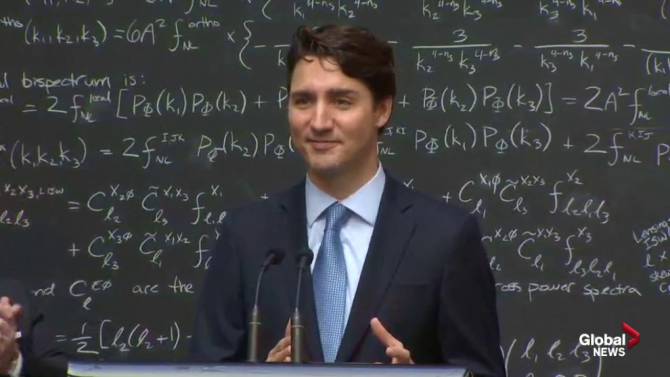
Quantum physics is complicated but…
Important choices are sometimes complicated.
Sometimes, almost always actually, these choices require mathematical formulas in some form. The pipeline decision involves a lot of math. The climate change discussion is based on huge mathematical simulations run worldwide and supercomputers. Canadians know these things. This is literally one of the reasons they elected the Liberals over the anti-science, anti-knowledge policies the Conservatives were offering and the vague opportunistic policies the NDP were offering in the last election.
So why on Earth should our voting system be so dead simple that in any given election it doesn’t give two thirds of the country a voice? So simple that almost a third of the country (urban Conservatives, Libs in Alberta, NDP all over, Greens everywhere) never, ever get the representative they want?
It is possible for something to be too simple you know.
Being complicated is not an argument against change. Even the committee’s response of a general type of system rather than a specific system isn’t an argument against change.
A Way Out
If the Liberals really want a way out, here’s an idea, you can do what New Zealand did and have a referendum to decide whether we should decide. What could be more Liberal than that? (sorry, but it’s kind of true).
The question would essentially be :
No seriously though, do you want to change the voting system to something proportional? – If so, answer Yes.
Or do you want to keep the current first past the post system? – If so, answer No.
— The Question
At least then we’d know there really is permission to do this properly. Then you could examine the choices before us, use the Gallagher Index and get down to it. Or as NDP democratic reform critic Nathan Cullen so eloquently put it this week in the house:
“Stop it. People aren’t stupid,” Cullen said. “Let’s get to work.”
— Nathan Cullen, NDP
It would also allow the Liberals wiggle room to half fulfill their campaign promise to make a change before the next election. If the referendum goes “yes” then they could campaign on their particular choice in the following election and implement that system without and additional referendum. The NDP could campaign on their favourite choice. And the Conservatives could campaign on referendums being an inappropriate way to make large scale national decisions about policy…oh wait.
Got it? Great. I’m sure you’ll make the right choice.
Actually, I’m really not. I’m getting worried. But so should the Liberals. If they get this wrong, they’re going to lose a lot of those committed, organized, focused people who want to make this country better that kept nagging them at the committee hearings.
Don’t Throw Away Our Shot
For the first time, we find ourselves not as a reflection of another power. Our politics is not a derivation of Westminster or Washington anymore. Our politics is specific to us, not a derivation from a distant metropolis. — “Canada in the Age of Donald Trump” — Stephen Marche, The Walrus
Hello Prime Minister Trudeau,
I know recently you and your wife were in New York, to make an inspiring speach at the UN I believe, and when you were there you got to go see the musical Hamilton. A play about an experimental nation, led by a ramshackle band of rebels, rogues, and intellectuals who wanted to throw off the shackles of the empire ruling them. The cast were purposely diverse to constrast to universally white male makeup of the original founders of the time. It had inspiring music and a universal message. It’s about democracy. It’s about the voice of the people and what those who are empowered by that voice need to do to honour that empowerment.
I know you understand this deeply becuase your father cared about it and gave our nation one of the greatest tools we have to defend our way of life, to hold the line against attempts to degrade the voice of the people. I don’tknow where you really stand on proportional voting and other various issues, but I know where you stand on the Charter of Rights and Freedoms and how important your job is as a representative of the voice and rights of the people.
So all I’ve got to say is: The world is burning, Prime Minister.
Everyone else seems to want to go the other way, away from the values of the Charter. Away from the values of openness, knowledge, honesty, fairness and hope. Away from what your father wanted, what you want, what so many Canadians want for humanity.
You know there are people in this country who want to the other way too. Certaintly not every Conservative party member or conservative Canadian want to, but enough. There are Canadians who think Trump is the solution or that he’s too brash and obvious but he has good ideas. These people cannot be ignored and they shouldn’t be ignored. Ignoring the complaints of people who feel left out of the accelerating changes and opportunities arising in our society is part of the problem and part of the reason Trump’s racist, hateful, fearful, anti-knowledge rhetoric found ground to anchor on to. The complaints and the problems that make people so angry that they resort to someone like Trump should not be ignored.
We need to hear the voices and find solutions that work for all people in our society from all classes, all walks of life, all ethnicities, all genders and all nations within our country.
Things are moving quickly. Quiker than we could have possibly imagined. England is still playing with their decision to abandon Europe and the wishes of most of the rest of the UK. America has made a choice that they are going to deeply regret for generations. France may be next.
The fires is starting Prime Minister and we might only have one shot to stop it from spreading here.
Luckily, you’ve already started the preparation to fight the fire whether you knew it at the time or not.
Our cousins to the south, who are so similar to us, have made this mistake so we cannot assume we will not make it as well. Sometimes being different for the sake of it is a good thing. Sometimes you’ve got a shot to change something. You may not know what the outcome will be, what the next chapter in your nation’s history will be but you know it will be different. And different is what we need right now.
The previous government did not go as far in tearing down a society built on hope, progress and honesty as Trump and the Republicans promise to in the coming years. However, they were moving in that direction, towards using fear, destroying knowledge, prioritizing money over lives or nature and defining a litmus test for Canadianness.
We cannot go down that road Prime Minister. Allowing more voices to be heard will allow us to continue on a different path. Diversity and openness have been our strongest and most rewarding values in the past 40 years. We still have not made up for the dark policies our nation carried out before that time, but we are healing and moving forward. We must not stop moving forward, even if all the world is turning back. They’re all wrong, and many of them even know it, but are unable to stop.
If we have a proportional system of voting and end up with more voices in parliament arguing and fighting for their issues, then that’s better. If proportional voting means we sending six or seven parties to parliament instead of five, that almost all of them will be interested in moving our country forward rather than backward. In fact, if some small parties show up with extremes views they will feel their voice is being heard in some way which reduces the anger of being ignored. They also will be less likely to hide their extreme views by fitting within a larger mainstream party. So I’m not worried about small parties trying to burn it all down. What I’m worried about is one party, getting absolute power even though the majority don’t want it and using that to mimic the ideas of fear, introversion and truthiness rising in so many of our allies.
There’s not much time to fix this. Things are going to keep moving quickly. It looks like your decision on how to deal with electoral reform will happen just as the fire is staring next door. Let’s choose something truly proportional that lets all voices be heard. Personally I think the people have spoken already by supporting your party and that we don’t need to be asked again to enact the new system. People will speak very loudly in the next few elections. If they reject it, they will reject it and it will be known even clearer than before. Everything can be changed, that’s the great thing about Canadian democracy, it’s up to us now, not some ancient founding father who could never have predicted this future. If we delay this change we may lose our one shot to make ourselves different enough to stop the cultural memes that enabled Trump to take hold there to take hold here.
We can’t save our cousins to the south. We can’t save the world. But consider this; if we can’t save ourselves from the oncoming storm, when we can see it so clearly, when we were are already in the process of building a defense, if Canada can’t do better with all the advantages the luck of history and geography have given us, with all the benefits the Charter gives us, with all the good will your government has right now; If we can’t do better then what hope does the world have?
So sing us out Prime Minister…
I am not throwing away my shot
I am not throwing away my shot
Hey yo, I’m just like my country
I’m young, scrappy and hungry
And I’m not throwing away my shot
I am not throwing away my shot
I am not throwing away my shot
Hey yo, I’m just like my country
I’m young, scrappy and hungry
And I’m not throwing away my shot
Message to Trudeau: #StickToThePlan
According to this article the Prime Minister had some words the other day in Montreal’s Le Devoir newspaper about how much support is now needed for different kinds of electoral reform. They weren’t the best words.
“Under the current system, (Canadians) now have a government they’re more satisfied with and the motivation to change the electoral system is less compelling”
and
“Less support and a small change could be acceptable. A bigger change would take greater support”
and then in parliament
“In the spring, the member opposite (Mulcair) was tremendously worried that we would use our majority to ram through changes to our electoral system and we worked with them to demonstrate the hard work that a committee could do, hearing all perspectives… Now, he’s changed his mind and he wants us to use our majority to ram through electoral change.”
Oh gosh.
There are a few things wrong with this entire line of discussion:
- It plays right into opposition arguments about Liberals changing their policies once they get in to power.
- Even worse, it plays to Conservative Party arguments that no change should be made without first going to a referendum. They are reading the mood of the country based on talking to people and polls. People will talk about it less right now because they are happy yes, but also because they assume it’s a done deal! Why rally in the streets when there is a minister travelling around doing town halls? There’s lots of support. And regardless, that’s your mandate! You were elected partially to fix our voting system. Stick to the plan. Don’t use the fact people aren’t protesting in the street to weaken the change. The Conservatives will use this window to argue that what is really needed is a referendum. Referenda are traditionally very very biased towards the status quo because it is easier to scare people to say no than to take a change and say yes to a particular policy. No change is perfect so it’s easy to come up with arguments against one, implicitly assuming the current system isn’t that bad. But in this case the status quo is that bad.
- It insults all the citizens who’s votes were wasted in the last election: Urban conservatives, rural Liberals, NDP voters, Green Voters. Just because the current system sometimes gives us parties that are good at governing doesn’t mean it’s working. The makeup of parliament should not be what it is today given the way people voted. 39% of the country supported the Liberals, they would likely still be in government under a better voting system. But they’d have a much stronger opposition and possibly be in a coalition with the NDP or the Greens. Even more likely, there would be a completely different party makeup once a few elections of effective voting allow people to create parties that truly match their beliefs.
- We’re. Not. Going. To. Take. It. The Liberals should be wary of underestimating how much the promise to change the voting system was part of their win. Most people in this country aren’t voting system nerds like me. The don’t really care about ranked ballot vs proportional or whatever. But they do have widespread, legitimate worries about politicians rigging the system in their favour, corruption, and business and usual power grabs. Whatever else the Liberals did and Trudeau appealed to in the last election, one thing you could always point to was that this was a party, and a leader, willing to promise in a concrete way to get change one of the structures in our democracy that benefits them. Sure the current voting system sometimes benefits the Conservatives greatly, but often it benefits the Liberals. Most importantly though, the current system has never, ever, benefited any other party in a structural way. The NDP and Bloc had to build incredible social movements just to be recognized in Parliament and the tiniest misstep has been enough historically to keep the NDP out of power against the two favoured, traditional parties. Don’t get me started on the amount of work the Greens have had to put in for their single seat when they should right have over a dozen.
Prime Minister Trudeau : #StickToThePlan #ERRE #DemReform
Teaching Yellow Dogs New Tricks
This is an interesting point by Stewart Prest at the Ottawa Citizen: Here’s an argument for Proportional Representation – the yellow dog effect. A yellow dog riding is what some call a ‘safe riding’ where the same party always wins the same seat election after election. More proportional voting would make most of these seats more competitive or at least give citizens multiple representatives.
I wonder if there is voter participation data on a per riding level that could let us see how much of the lack of low voter turnout is due to yellow dog ridings? I would assume voter turnout is much lower in a riding everyone knows won’t change hands. So nationally, how many of the people are sitting out of voting altogether are in those ridings?
My Letter to my MP on Electoral Reform
Colorado may be about to try out another experimental lifestyle habit, single payer universal healthcare:
- Colorado May Replace Obamacare with Single Payer
- Prominent Democratic Consultants Sign Up to Defeat Single Payer in Colorado
- Lobbyists Move to Stop Colorado
- Report says ColoradoCare would have higher revenues than McDonald’s
This needs to happen. Just try it out America! If you are so into allowing states to experiment just try it.
What trouble could one little state cause?…
Of course, this is how we got single payer in Canada. Saskatchewan tried it out, slowly country came along. 40 years later our health care system is one of the most commonly cited things Canadians are proud of about our country.


 Pop The Stack